Pre-Purchase Building Inspection: Reveal Hidden Moisture and Termites

Pre Plaster Inspection: The Ultimate 10-Point Checklist
April 15, 2026
Termite and Pest Inspection in Victoria: 5 Red Flags Your Inspector Must Find
April 18, 2026
Buying a property in Melbourne is an exciting milestone, but it is also a massive financial commitment. With the city’s footprint expanding rapidly and established suburbs commanding premium prices in 2026, navigating the market requires more than just a pre-approval from your bank. It demands rigorous technical due diligence. While a home may look flawless on the surface, its structure could be harboring invisible defects that have the potential to decimate your equity. A professional pre purchase building inspection is the definitive strategy for smart buyers who refuse to gamble. Our comprehensive audits go beyond a generic checklist; we utilize advanced technology specifically designed to reveal the property’s silent killers: hidden moisture and termite activity. Without this information, you are not just buying a home you are acquiring an unknown risk.
The Urgent Case for Technical Property Audits in 2026
The property landscape has evolved significantly over the last few years. The rush of construction in the early 2020s and the challenges of recent weather patterns have left a legacy of unique risks in residential buildings. Today’s buyers are facing issues that were less prevalent in previous decades, making a professional assessment non-negotiable. Whether you are conducting a final pre plaster inspection on a new build or auditing an 80-year-old period home, the goal is total clarity. An independent audit separates a smart investment from a devastating “money pit,” ensuring your hard-earned money is protected.
Understanding the Threats: Why We Focus on Moisture and Termites
When a house “fails” an inspection, it is rarely because the paint color is wrong or the carpet is worn. It fails because its primary structural elements are compromised. While foundation movement (such as slab heave in the northern and western growth corridors) is a major concern, it is often caused by the very issues we specialize in detecting: unmanaged water and timber-destroying organisms. Moisture and termites are the “silent partners” that erode a building’s value over time.
Part 1: Moisture—The Catalyst for Structural Decay
Moisture is perhaps the single most dangerous element for any building. Water ingress, whether from a slow leak inside a wall or incorrect site grading, does not just cause cosmetic mold. It is the leading cause of structural failure in Victorian homes. If left undetected, water penetrates the building envelope, compromising the frame and creating conditions conducive to major, long-term issues.
Thermal Imaging: Seeing Beyond the Plaster
The challenge for buyers is that water damage is often hidden. A leaking shower tray or non-compliant waterproofing membrane can rot a bathroom’s timber floor joists for years before a single damp spot appears on the ceiling downstairs. In 2026, Core Building Inspections uses advanced diagnostic equipment to bridge this visibility gap. High-resolution thermal imaging cameras detect temperature differences on a wall surface, which are invisible to the naked eye. Because wet patches hold different thermal mass than dry ones, they appear as “cold anomalies” on our screens, pinpointing the source of a leak without damaging the property. This tool is invaluable during a Pre-Plaster House Inspection of a new home or a final handover check of a renovation, verifying that no “covered defects” exist.
The Dangers of Slab Heave and Clay Soil
Melbourne’s geological profile includes vast areas of highly reactive clay. When this soil gets unevenly wet, it expands (slab heave); when it dries, it shrinks (settlement). In suburbs like Point Cook, Craigieburn, and Tarneit, preventing moisture from pooling around a slab perimeter is critical. A professional auditor evaluates the property’s grading, retaining walls, and stormwater drainage systems to ensure they are diverting water correctly. This is one of the most vital components of a final pre-settlement audit on a new property or a comprehensive pre plaster inspection Melbourne audit, where site drainage failures are frequently identified before landscaping hides them.
Combating Rising Damp and Ventilation Failures
For buyers of Melbourne’s iconic heritage stock, the moisture risk is often from the ground up. Rising damp—where moisture is pulled up through porous brickwork due to a failed damp-proof course—is a common and costly issue in older homes. We also focus heavily on subfloor ventilation. If a crawl space lacks adequate cross-flow ventilation, the resulting damp, stagnant air creates the perfect environment for both mold and timber rot. This decay can compromise the subfloor framing so severely that entire sections of a floor must be replaced.
Part 2: Termites—The Silent, Subterranean Destroyers
While moisture often initiates the damage, termites are the organisms that execute the destruction. In Victoria, subterranean termites (Coptotermes acinaciformis) are responsible for billions of dollars of damage annually, more than storms and fires combined. The unique problem with termites is that their entire lifecycles are subterranean. They enter a building in the dark, usually through foundation cracks or “conducive conduits,” and devour the internal structural timber (the sapwood), leaving only a micro-thin layer of surface wood. They operate in total silence, and damage is rarely visible until the compromise is severe—often when a vacuum cleaner head passes right through a skirting board.
Moisture Mapping: Identifying Termite Conducive Conditions
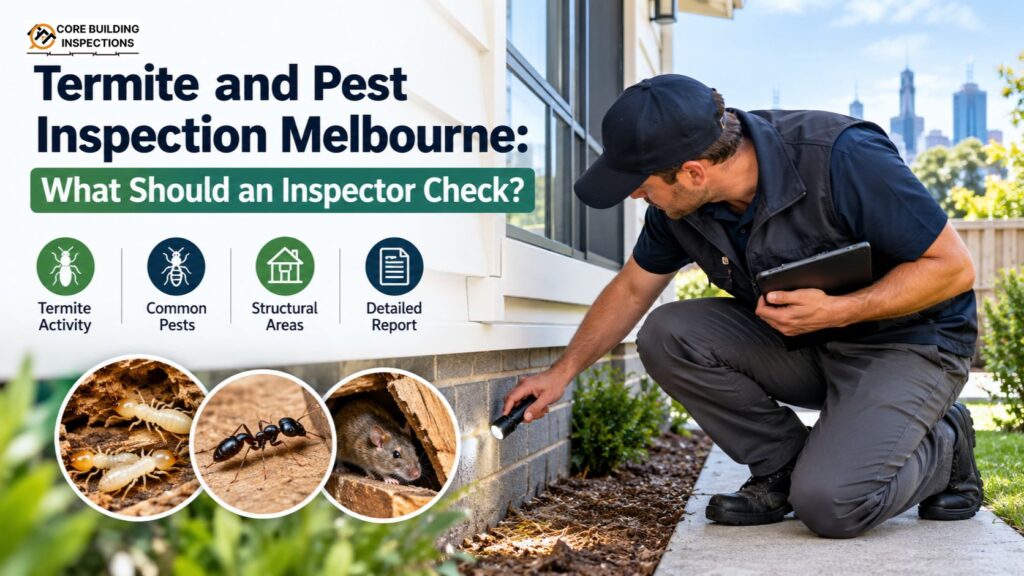
A successful Pest Inspection service melbourne does not just search for active termites; it searchers for the conditions that invite them. Because termites are soft-bodied organisms, they require constant moisture to survive. A house with a slow plumbing leak, pooling foundation water, or inadequate subfloor ventilation has a statistically higher risk of infestation. Our moisture detection tools are therefore the first line of defense in a termite audit. By creating a “moisture map” of the home’s interior and exterior, we can identify “high-conducive zones” that may not have active termites yet but represent a significant and near-certain risk for the future.
The Importance of Sound-Acoustic Sensors
Our professional auditors are equipped with technical diagnostic tools, including sound-acoustic sensors and tappers. Because termites hollow out timber beams, a professional can detect subtle, hollow acoustic responses from structural members. A simple visual inspection which some providers offer as a standard check is inadequate in the face of these stealthy organisms. In 2026, a truly comprehensive audit must involve technology designed to hear and feel what the human senses miss.
Negotiation Leverage: Turning Defects into Discounts
The most practical benefit of a comprehensive building report is the leverage it provides during the settlement phase. If a pre purchase building inspection reveals active termites, significant historical rot, or active moisture leaks, you are no longer operating in the dark. You are equipped with photographic, technical, and undeniable proof of the property’s actual condition. This data serves as an insurance policy for your equity, allowing your solicitor to request immediate rectifications before the unconditional date or, more frequently, negotiate a powerful purchase price reduction. A Pre-Plaster House Inspection that identifies $20,000 worth of necessary waterproofing repairs gives you $20,000 of negotiating capital, ensuring you pay a fair market price for a flawed property.
Conclusion: Secure Your Future with Core Building Inspections
Buying a property should be a moment of great satisfaction, not a source of constant, unseen anxiety. Don’t rely on the seller’s assurances, a fresh coat of paint, or a generic check. In the complex 2026 property market, a data-driven Pre purchase building inspection is the ultimate key to safe, secure homeownership. Our expert auditors, equipped with advanced thermal imaging and moisture detection technology, are dedicated to protecting your investment. We treat every inspection as if we were buying the property for our own families, ensuring that every hidden risk is documented and every silent defect is revealed. Are you ready to secure your future home? 👉 [Contact Core Building Inspections today] to book a comprehensive technical audit that fits your budget and ensures your peace of mind.