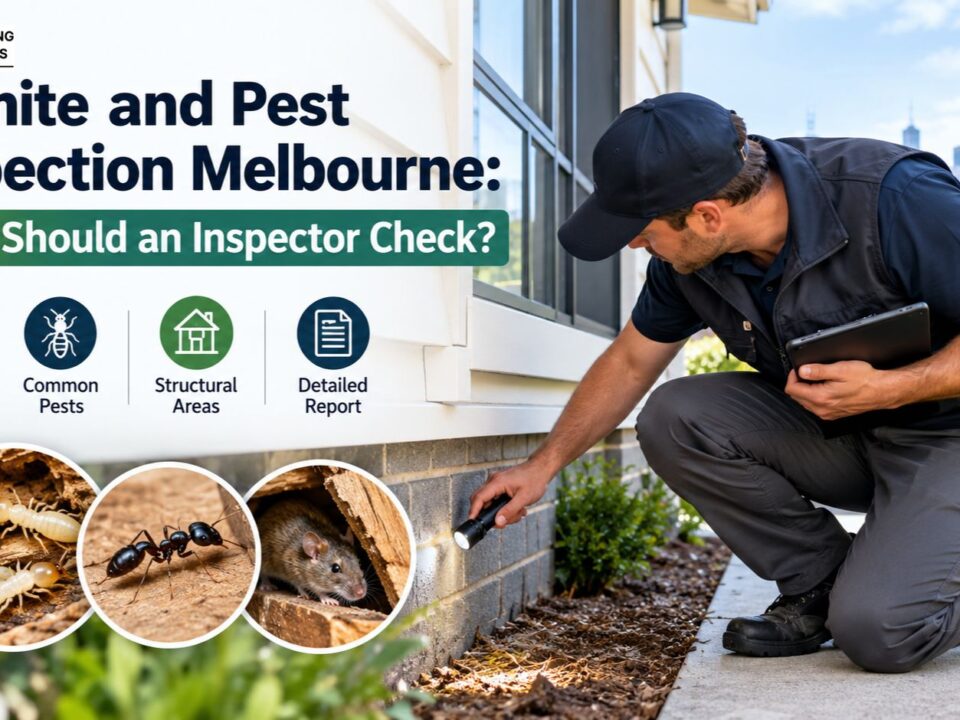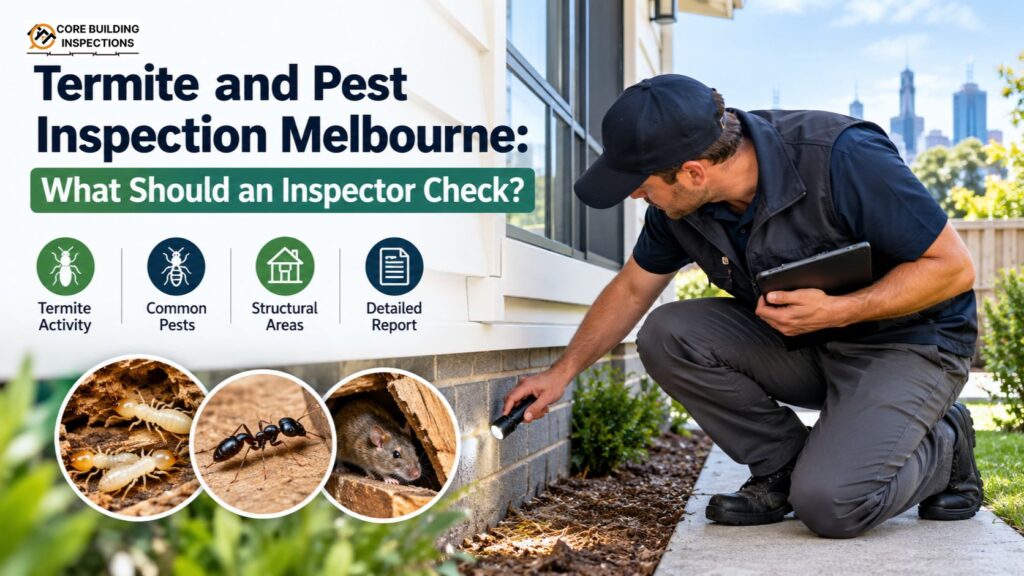
Trusted Melbourne Experts for Termite and Pest Inspections

Expert Building Frame Inspection Victoria for New Homes
July 31, 2026
What Does a Pre Purchase Building Inspection Cover in Melbourne?
August 12, 2026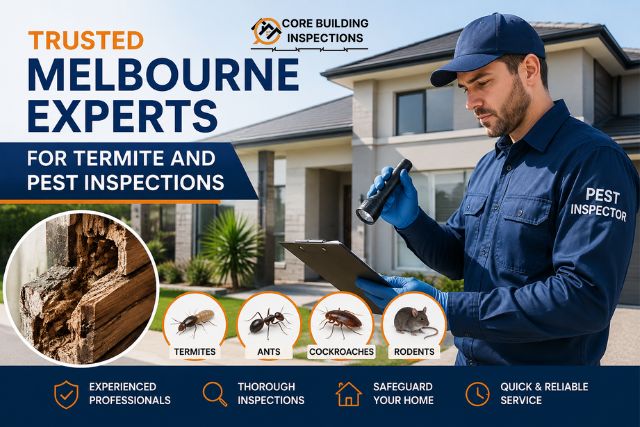
Buying a property is usually the biggest financial step you’ll ever take. No matter if you’re buying an older wooden house in Melbourne’s inner north, a solid brick house in the eastern suburbs, or a new build in a growing outer area, it’s crucial to protect your investment from hidden structural problems. When it comes to getting a thorough termite and pest inspection in Victoria, buyers, sellers, and current homeowners can’t afford to cut corners. Subterranean termites, often called silent destroyers, cause millions of dollars in damage to Australian homes every year. Since standard home insurance almost never covers damage from timber pests, finding them early is your best defense against expensive repairs. Victoria’s climate, with wet winters and warm, humid summers, is perfect for termite colonies. This makes professional timber pest inspections essential. A good inspection isn’t just about checking for pests on the walls. It involves a deep look into subfloors, roof spaces, internal wall frames, and the garden area. Inspectors use special tools to find active infestations and moisture problems before they cause serious structural damage.
Understanding the Hidden Threat of Timber Pests in Victoria
Melbourne’s varied housing styles contribute to its unique feel, but they also create different conditions for timber pests. Homes in Victoria often have features like timber stumps, crawl spaces with little room, garden soil that’s too close to the house, or damp ground touching the structure. These elements provide termites with easy places to nest and find food. Australia has many types of termites, but a few are the biggest threat to homes in Victoria. The most damaging is Coptotermes acinaciformis, a type of subterranean termite. They can create large underground colonies and use mud tubes to reach the inside of walls, floor supports, and roof beams. Coptotermes frenchi is another common species, especially in suburban areas and near forests. These termites are hard to detect because they often eat structural timber from the inside, leaving only a thin outer layer of wood or paint. Dampwood termites, or Porotermes adamsoni, commonly infest homes that have poor ventilation under the floor, leaks that haven’t been fixed, or rotting wooden elements in the garden. Because termites work discreetly within enclosed spaces, a home can appear structurally sound on the surface while suffering significant internal hollows behind plasterboard walls. Without professional evaluation equipment, active colonies can thrive inside a house unnoticed for long periods.
Recognizing the Early Warning Signs Around Your Property
Regular professional inspections are important, but knowing how to spot small signs yourself means you can deal with a problem before it becomes a major structural issue. One of the most obvious signs of termites is finding mud tubes. Subterranean termites build these narrow tunnels out of soil and saliva to keep moisture levels high and protect themselves from predators as they travel across concrete, posts, or under floors. Another sign is wood that sounds hollow. If you tap architraves, door frames, or skirting boards, they should make a solid sound. If it sounds papery or hollow, it usually means termites have eaten the inside of the wood. You should also look out for doors that stick or windows that are hard to open or close. When termites eat the wood inside frames, the structure can shift, or the moisture from their tunnels can cause the surrounding wood to swell and bind. During warmer months, you might find discarded reproductive wings near windows, lights, or doorways. These clear wings show that reproductive termites have swarmed nearby to start a new colony. Finally, paint that looks blistered or bubbled on plasterboard walls, which people often mistake for dampness, can actually be caused by termites building their tunnels right behind the wall.
Why Choose Core Building Inspections for Your Home
When it comes to evaluating property integrity, selecting a highly qualified and independent inspection partner is critical. Core Building Inspections has established itself as a premier provider of comprehensive building and timber pest evaluations throughout Melbourne and regional Victoria. With over a decade of hands-on industry experience, their team of registered, long-term inspectors brings unparalleled local expertise to every assessment. A key advantage of working with Core Building Inspections is their commitment to clear, unbiased reporting backed by cutting-edge diagnostic technology. Rather than relying solely on visual checks, their inspectors utilize advanced computer-aided inspection tools, high-sensitivity thermal imaging cameras, and electronic moisture meters to evaluate hidden building cavities without damaging property surfaces. Whether you are a first-home buyer navigating a fast-paced auction, a vendor preparing a pre-sale disclosure, or a homeowner scheduling a routine annual health check, Core Building Inspections delivers easy-to-read, photo-documented reports—often within 24 hours—to give you complete financial and structural clarity.
The Comprehensive Process of a Professional Timber Pest Assessment
When you book a dedicated termite and pest inspection Melbourne buyers and homeowners trust, you are receiving a systematic evaluation that strictly adheres to Australian Standard AS 4349.3 (Inspection of Buildings – Timber Pests). Professional inspectors conduct a methodical area-by-area examination across all accessible parts of the property.
High-Sensitivity Thermal Imaging Technology
Subterranean termites generate heat through their collective metabolic activity inside active nests and working galleries. By using high-resolution thermal imaging cameras, qualified inspectors scan internal plasterboard, ceiling plaster, and subfloor frameworks. This technology pinpoints subtle thermal anomalies caused by hidden moisture or active termite clusters behind walls without requiring invasive drilling or wall dismantling.
Moisture Detection and Acoustic Sounding
Termites thrive in high-humidity environments and require consistent moisture to survive. Inspectors use electronic moisture meters to test timber framing around high-risk wet zones, such as bathrooms, laundries, kitchens, and plumbing penetrations. High moisture readings frequently highlight hidden pipe leaks or pest entry points that require immediate attention. Additionally, inspectors systematically test timber architraves, door jams, floorboards, and exposed roof beams using specialized sounding dongers to detect hollowed-out sections.
Complete Internal and External Coverage
A thorough assessment leaves no stone unturned. The internal evaluation covers all rooms, fitted joinery, internal doors, window frames, and subfloor spaces where timber stumps, bearers, and joists meet the soil. Up in the roof void, inspectors examine ceiling joists, roof trusses, and wall plates where warm air accumulates. Externally, the assessment covers the building cladding, weep holes along slab edges, verandas, timber decking, outbuildings, garden retaining walls, fencing, and mature trees located within fifty meters of the main residence.
Combining Building and Pest Inspections for Full Peace of Mind
While timber pest activity poses an immediate threat to a building’s framework, it rarely occurs in total isolation. Environmental conditions such as subfloor dampness, poor roof drainage, cracked concrete foundations, or unventilated subfloor voids create the exact high-moisture conditions that attract subterranean termites and fungal wood decay in the first place. By booking a combined Building and Pest Inspection with Core Building Inspections, property owners receive an all-inclusive assessment in a single visit. This combined approach evaluates structural foundation integrity, roof cladding, plumbing leaks, safety hazards, and building defects alongside active pest activity. Having both structural and pest assessments conducted simultaneously ensures you understand not only whether pests are present, but also what underlying maintenance issues might invite future infestations.
Practical Preventative Steps for Long-Term Protection
Even after receiving a clean inspection report, ongoing property maintenance is essential to maintain a strong barrier against timber pests. Homeowners can take several proactive steps around their property to significantly lower their risk: First, eliminate direct wood-to-soil contact. Avoid storing firewood, offcut timber, or cardboard boxes directly against external house walls, underneath timber verandas, or inside subfloor crawl spaces. Second, maintain subfloor ventilation. Ensure subfloor vents remain completely clear of soil, garden mulch, and storage items to encourage continuous airflow and keep subfloor soil dry. Third, address plumbing leaks immediately. Fix dripping garden taps, hot water overflow pipes, air conditioner condensation lines, and internal shower leaks promptly to eliminate damp zones that attract foraging termites. Fourth, keep slab edges exposed. Ensure that concrete slab edges and weep holes remain visible at least seventy-five millimeters above ground level so any emerging termite shelter tubes can be identified straight away. Finally, replace untreated timber garden features. Swap out decaying timber garden borders or retaining walls with masonry, concrete, or naturally resistant hardwood materials. Above all, follow CSIRO recommendations by scheduling a professional timber pest assessment at least once every twelve months.
Conclusion
Protecting your home from the silent destruction of timber pests requires continuous vigilance, local industry knowledge, and advanced diagnostic equipment. By partnering with trusted experts like Core Building Inspections, you gain complete clarity and confidence regarding your property’s true condition. From comprehensive thermal imaging scans to detailed 24-hour digital reports, their experienced team ensures that every corner of your building from foundation soil to roof trusses—is thoroughly assessed. Don’t leave your most valuable financial asset to chance; schedule a professional assessment today and safeguard your home’s structural future.
Frequently Asked Questions:
Q1: How frequently should I book a termite and pest inspection in Victoria?
A1: According to Australian Standards and CSIRO guidelines, residential properties in Victoria should undergo a professional timber pest inspection at least once every 12 months. Properties located in high-risk timbered areas or those with a history of prior infestation may benefit from checks every 6 months.
Q2: Will standard home insurance cover damage caused by termites in Melbourne?
A2: In almost all instances, standard home and building insurance policies in Australia explicitly exclude timber pest and termite damage, treating it as preventable property maintenance rather than an accidental event.
Q3: How long does a full building and pest inspection take to complete?
A3: A comprehensive inspection on a standard residential property typically takes between 1.5 and 2.5 hours on-site, depending on property size, subfloor accessibility, roof design, and general site conditions.
Q4: What equipment does Core Building Inspections use during an assessment?
A4: Inspectors at Core Building Inspections utilize high-sensitivity thermal imaging cameras, electronic moisture meters, acoustic sounding dongers, and computer-aided reporting systems to accurately identify termite activity and hidden dampness without damaging walls or finishes.