Complete Guide to Property Inspection Services Melbourne

Why Choose Professional Pest Inspection Service Melbourne
June 30, 2026
Common Pest Problems Found in Melbourne Properties
June 30, 2026
Purchasing a home or commercial property is a major financial decision. When visiting an open house, it is easy to get distracted by how the space looks. Professional staging is specifically meant to highlight a property’s best features, such as modern finishes or natural light, but these decorations can also hide serious underlying problems. A new coat of paint or strategically placed furniture can mask structural issues, termite activity, or leaks in bathrooms and kitchens. Because property sales generally follow the principle of buyer beware, you become responsible for any existing damage once the sale is finalized. Arranging an independent inspection ensures you understand the actual condition of the building before you commit to the purchase.
Understanding the Varied Landscape of Property Assessments
When you are looking at buying property, it is important to realize that a standard inspection does not cover every situation. Every building has its own set of potential problems based on how and when it was constructed. If you are interested in an old heritage cottage, you are likely dealing with aging foundations, rising damp, or outdated electrical systems that would not be an issue in a brand-new apartment. On the other hand, a modern high-rise might have specific waterproofing or cladding concerns that an older house would not have. Because the risks change depending on the type of home, the way you check that property needs to change as well.
For most people buying an existing house, the most reliable approach is to get a combined pre-purchase building and timber pest assessment. This is often considered the standard for a reason. Instead of just looking at the surface, this service brings together two different types of expertise into one report. The structural side of the inspection is about the physical integrity of the building. The inspector will check the roof, the walls, and the subfloor to make sure the house is stable. They look for signs of poor workmanship, sagging beams, or major cracks that could indicate the ground is shifting. This part of the audit is designed to tell you if the house is actually safe and well-built. The second part of the assessment focuses on biological threats, which can be just as damaging as structural failures. Timber pests like termites or wood-boring beetles can destroy the internal frame of a house without showing much evidence on the outside. A specialist knows how to look for moisture in the walls or specific damage patterns in the wood that indicate an infestation. They also check for fungal decay and wood rot, which often happen in areas with poor ventilation or hidden leaks. By combining these two inspections, you get a much clearer picture of what you are actually buying. Handling these inspections early in the buying process is a practical step for your due diligence. Most real estate contracts have specific timelines for when these checks must be completed. If you choose an inspection that does not match the age or style of the property, you might miss a serious flaw that ends up costing you a lot of money later. Making sure your audit is specialized to the specific property ensures that you are fully aware of any repairs or maintenance issues before you finalize the purchase.
The Deep-Seated Risks of Structural Movement and Defects
A professional property inspection is valuable because it identifies serious structural issues that an average person would likely miss. A house functions as a complex system where the foundation, load-bearing walls, and roof work together to support the weight of the building. If one part of this system is damaged, it can cause a series of problems that affect the stability of the entire structure. Professional inspectors look beyond the appearance of a property to check the actual structure against Australian Standards. When components like floor stumps sink, bearers rot, or roof trusses sag, the weight of the building is no longer distributed properly. This stress can warp load-bearing walls, which eventually causes internal plaster to crack and external brick walls to pull apart. Identifying these structural problems early helps you avoid an expensive mistake. By finding them before the contract is finalized, you can either decide not to buy or accurately budget for the repairs needed.
Navigating Victoria’s Highly Reactive Basalt Clay Soils
Building in Victoria’s outer suburbs and new estates involves dealing with specific geological challenges. Much of the ground in these areas, particularly to the north and west, consists of highly reactive volcanic basalt clay. This soil behaves much like a sponge, swelling significantly during wet winters and then shrinking back quickly during dry summer periods. Soil movement is a common issue in Melbourne, which makes professional building inspections necessary to identify localized risks. When drainage is poorly managed or stormwater pipes leak into the ground, uneven soil pressure causes slab heave. This upward movement puts pressure on the foundation, leading to cracked concrete slabs, damaged internal plaster, and step-cracking in external bricks. A local inspector knows these specific signs and can help identify potential foundation failures before they become more serious.
Uncovering Invisible Moisture Ingress and Waterproofing Failures
Water is one of the most destructive and expensive forces a property owner can face. Left unchecked, hidden moisture ingress can silently rot internal structural timber framing, destroy expensive plaster ceilings, ruin floor coverings, and encourage the growth of toxic black mold. The worst part about water damage is that it usually occurs behind closed walls or beneath floorboards, meaning it can go unnoticed for months until severe damage has already taken place. During a professional property evaluation, a licensed melbourne building inspector utilizes advanced non-invasive diagnostic tools to trace hidden dampness. They pay close attention to internal wet areas like bathrooms, kitchens, and laundries, checking for failed tiling waterproofing membranes that allow water to leak directly into the wall voids. They also inspect the ceiling cavity for active under-roof leaks, rust-damaged valleys, and blocked gutters that could cause rainwater to overflow back into the home’s eaves during heavy winter storms.
Tracing Silent Timber Pests and Biological Threats
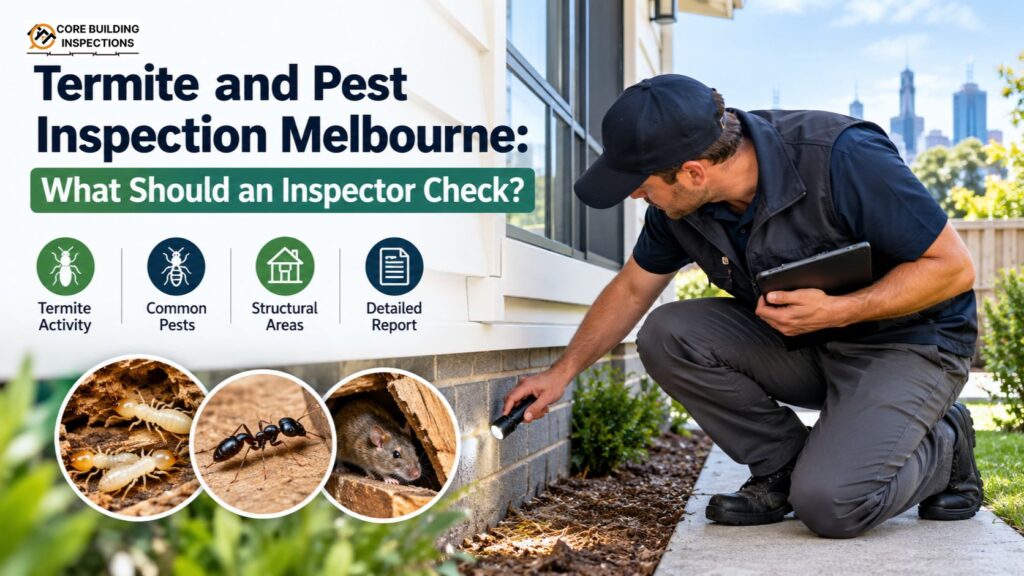
While checking the concrete and masonry foundation is vital, structural movement is not the only threat that can compromise a home from the inside out. Victoria’s seasonal climate, combined with widespread timber-framed construction, creates the perfect environment for wood-destroying insects. Subterranean termites are incredibly destructive pests that travel silently from underground colonies through mud tracking tubes to feast on cellulose-rich timber framing. Because they hollow out timber framing from the inside out while leaving the exterior surface intact, a home can look perfectly sound even when its structural core is severely compromised. By ensuring your property assessment includes a comprehensive pest scan, buyers can find out exactly what is happening inside the timber frame. Certified timber pest technicians use advanced acoustic detection tools and thermal sensors to locate hidden colonies, trace past borer damage, and identify active wood-decay fungi. They also evaluate external risk factors, such as poor subfloor ventilation, leaking garden taps, or garden mulch piled directly against brick weep holes, which actively invite termites into the property. Catching these biological threats early saves you from inheriting an unstable timber structure that is incredibly expensive to repair.
Five Critical Inspection Zones Addressed in a Master Report
A trusted, professional property health check leaves absolutely zero blind spots, methodically auditing five primary structural zones across the entire allotment:
-
Internal Living Spaces: Inspectors systematically move room by room, checking wall alignments, monitoring window operations, and scanning ceilings for nail pops or plaster sagging.
-
The Roof Cavity Space: Field teams climb directly into the ceiling void to evaluate the roof’s structural framing skeleton, looking closely for sagging roof trusses, compromised insulation layouts, and unlinked bathroom exhaust fans.
-
Accessible Subfloor Voids: Where safe physical crawlspaces exist, inspectors drop beneath the flooring to examine the condition of supporting concrete stumps, subfloor brick piers, timber bearers, and soil dampness.
-
Exterior Building Envelopes: The external walls, brick veneer masonry, lintels, and timber cladding are inspected for stress fractures, step-cracking, and weathering damage.
-
Exterior Roof Platforms & Allotment Drainage: Using professional ladders, inspectors check the integrity of concrete roof tiles, corrugated metal sheets, valley gutters, and perimeter downpipe compliance to ensure stormwater drains safely away from the foundations.
Gaining Powerful Contractual Leverage for Price Negotiations
Investing in an independent property report provides immense financial and legal leverage when you are negotiating with vendors and real estate agents. A comprehensive, photographic digital defect register serves as an unbiased mirror of the home’s actual condition, completely cutting through optimistic real estate marketing spin. When your conveyancer or solicitor is armed with an independent assessment detailing major defects or safety hazards, the balance of power shifts completely in your direction. You can use the report’s evidence to negotiate a direct price reduction from the vendor to cover the upcoming maintenance costs, or include a special contract condition requiring the seller to fix specific structural problems via a licensed builder prior to settlement. Alternatively, if the repair bills are simply too high or the vendor refuses to cooperate, a building clause gives you the clear legal grounds needed to exit the contract entirely while protecting your hard-earned deposit.
Partner with Core Building Inspections to Protect Your Investment
When you are preparing to invest your life savings into a home, you deserve an independent professional team that prioritizes technical accuracy, transparent communication, and absolute customer care. Core Building Inspections stands out as Victoria’s trusted choice for property inspection services melbourne families and commercial investors rely on. Every single building and pest assessment we conduct is executed by fully qualified, insured construction practitioners officially registered with the Victorian Building Authority (VBA). This registration means your finished digital report carries full legal weight and complies completely with all relevant Australian Standards. We maintain absolute strategic independence from real estate networks, volume builders, and finance brokers, meaning we work strictly for you—the property buyer. Because real estate markets move rapidly, our streamlined framework guarantees a rapid 24-hour digital turnaround. We deliver an itemized, clear plain-English report with high-resolution photography straight to your inbox within 24 hours of finishing our on-site physical survey, giving your legal team the clear evidence needed to negotiate with absolute confidence.
Frequently Asked Questions
Q: What is the difference between a standard building check and a pest assessment?
A: A standard structural check focuses on the physical integrity, safety hazards, and trade workmanship compliance of the home’s foundations, framing, exterior masonry, and wet areas. A pest check is a separate, highly specialized biological assessment designed to locate subterranean termites, wood-boring beetles, fungal decay, and active environmental conditions that invite wood-destroying insects into the property.
Q: Can a vendor or real estate agent refuse access to an independent inspector?
A: No. Under standard Victorian Contract of Sale conditions, a property buyer is legally entitled to include a “subject to building and pest inspection” clause. This clause grants safe, reasonable on-site access to you and your nominated independent building inspector during the designated contract window.
Q: How long does a professional residential inspection take on-site?
A: On average, our licensed VBA inspectors spend between 1.5 to 3 hours thoroughly checking a standard residential property on-site. This timeframe can vary slightly depending on the layout size, the age of the building, and the physical accessibility of the roof cavity and subfloor crawlspaces.
Q: Should I rely on a building inspection report provided directly by the vendor?
A: No, it is highly recommended to arrange your own independent report. A report provided by the seller or real estate agent may carry an inherent conflict of interest or lack professional indemnity insurance protection for you as the eventual buyer. Having your own independent professional on-site is the only way to ensure absolute transparency.
Finalize Your Property Contract From a Position of Absolute Strength
Do not leave the structural security of your largest financial investment to visual guesswork, clever staging, or a rushed open-house walk-through. Ensure your new home is safe, sound, straight, and fully code-compliant before you buy. Secure your absolute peace of mind by booking your comprehensive property audit today with Core Building Inspections.