7 Benefits of Getting a Victoria Pre-Purchase House Inspection

8 Pre Plaster Inspection Tips Every Homeowner Should Follow
July 21, 2026
9 Things to Know About Building Inspections in Melbourne
July 28, 2026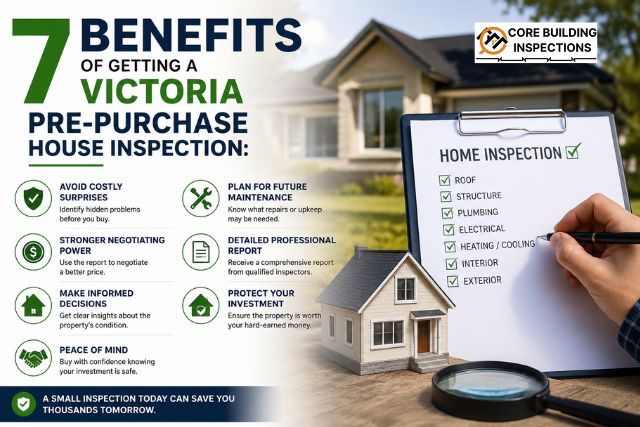
Buying a home is one of the most exciting milestones in life, but it is also one of the largest financial commitments you will ever make. In a competitive property market, it is easy to get swept away by stylish interior staging, modern light fixtures, and a fresh coat of paint. However, cosmetic presentation often masks serious structural defects, active pest infestations, or costly maintenance issues beneath the surface. In Victoria, standard real estate contracts operate under the principle of caveat emptor let the buyer beware. Once you sign an unconditional contract or purchase at an auction, any hidden defects become your legal and financial responsibility. Engaging an independent, registered professional to conduct a comprehensive structural evaluation before you buy is the single most effective way to safeguard your investment. Here are seven major benefits of scheduling a pre-purchase house inspection before finalizing your next property transaction.
1. Uncovering Hidden Structural Defects Before You Buy
A home’s foundational skeleton including its concrete slab or timber stumps, load-bearing frames, floor joists, and roof trusses—forms the backbone of the entire building. While cosmetic imperfections like minor plaster hairline cracks are easy and inexpensive to fix, major structural defects can cost tens of thousands of dollars to rectify.
During a professional assessment, an expert examines critical structural zones that regular buyers rarely check, including:
-
The Roof Void: Checking roof trusses, collar ties, and ceiling joists for sagging, wood rot, or compromised structural timber.
-
The Subfloor Crawlspace: Inspecting timber stumps, piers, and floor joists for soil movement, dampness, or decay.
-
External Masonry: Looking for step-cracking, leaning walls, or foundation movement.
Identifying these defects before signing a contract protects you from buying a house that requires emergency structural stabilization down the track.
2. Identifying Active Timber Pest Infestations and Timber Rot
Subterranean termites and wood-boring insects are widespread throughout Australia, and Victoria is no exception. These pests live in underground colonies and feed silently on the cellulose in your home’s timber framing. Because they hollow out studs and joists from the inside out while leaving the outer shell intact, significant structural damage can occur long before an untrained eye notices any symptoms. Standard Australian home insurance policies completely exclude coverage for termite damage, leaving property owners fully responsible for repair costs. A detailed pest audit identifies active termite colonies, historical pest damage, and risk factors like poor subfloor ventilation, high moisture levels, or firewood stored directly against external brickwork.
3. Gaining Immense Contractual and Price Negotiation Leverage
Knowledge is power when negotiating real estate transactions. When you possess an independent, fact-based digital report detailing required structural repairs or safety hazards, the balance of power shifts in your direction.
Armed with an objective report, you can:
-
Request a Direct Price Reduction: Use the estimated repair costs provided by contractors to request a lower purchase price from the vendor.
-
Require Pre-Settlement Repairs: Include a special clause in your contract requiring the seller to fix specified issues using licensed trades before final settlement.
-
Walk Away from a Trap: If the building report reveals catastrophic structural failure or safety hazards, you gain the precise legal grounds (if buying subject to building inspection) to pull out of the deal with your deposit fully intact.
4. Detecting Concealed Plumbing Issues and Moisture Ingress
Water ingress is one of the most destructive elements a home can face. Unseen plumbing leaks, failing shower waterproofing membranes, and rising damp can quietly destroy framing timbers, ruin internal plasterboard, and breed toxic mold spores within living spaces. Professional inspectors use modern, non-destructive diagnostic tools to locate hidden dampness behind walls and under floors:
-
Thermal Imaging Cameras: Map out subtle temperature variations to locate concealed water leaks and missing wall insulation.
-
Digital Moisture Meters: Accurately measure moisture levels inside building materials without damaging walls or tiles.
Detecting a leaking shower tray, bad drainage layout, or blocked perimeter weep hole before settlement prevents expensive bathroom strip-outs and health hazards after move-in.
5. Identifying Safety Hazards and Non-Compliant DIY Alterations
Over a property’s lifetime, previous owners may have attempted unpermitted or uncertified DIY alterations. Unlicensed home renovations such as removing a load-bearing wall to create an open-plan layout, adding an unapproved deck, or building an illegal pergola present severe safety risks and compliance liabilities.
An experienced building examiner evaluates safety risks across the property, including:
-
Non-compliant balustrades, deck handrails, and pool safety barriers.
-
Unanchored retaining walls at risk of collapse.
-
Structural modifications made without required building permits from local councils.
If a previous owner built unapproved structures on the property, local councils can issue compliance notices requiring you, as the new owner, to demolish or bring those structures up to code at your own expense.
6. Budgeting Accurately for Future Maintenance and Repairs
No house is completely perfect even brand-new homes can carry minor defects or unfinished trade work. An independent building report functions as a long-term maintenance manual for your new home.
The report categorizes findings into clear priority tiers:
-
Major Defects: Structural issues, safety hazards, and active water leaks that require immediate trade intervention.
-
Minor Defects: Cosmetic imperfections, worn sealant, or minor weathering that can be addressed during routine maintenance.
-
Safety & Maintenance Advice: Actionable recommendations to improve subfloor airflow, redirect surface water runoff, and preserve timber structures over time.
Having this information upfront allows you to plan your post-purchase budget accurately, ensuring you set aside adequate funds for necessary maintenance rather than being caught off guard by unexpected home repair emergencies.
7. Achieving Complete Peace of Mind on Your Investment
The period leading up to buying a house can be stressful and emotionally exhausting. Worrying about whether you are making a sound financial decision or walking into a money pit can ruin the excitement of homeownership. Engaging an independent, registered professional to conduct a forensic review provides absolute clarity. Knowing that every accessible zone from the roof peak down to the subfloor soil has been methodically evaluated gives you complete confidence to move forward with your purchase, bid decisively at auction, or walk away from a risky property.
Independent Quality Assurance with Core Building Inspections
When you are preparing to invest your life savings into Victorian real estate, you need an independent advocate who prioritizes accuracy, consumer protection, and transparency. Core Building Inspections stands out as Victoria’s premier choice for independent property due diligence. Every residential property audit we conduct is handled by fully qualified construction practitioners registered with the Victorian Building Authority (VBA). We remain 100% independent from real estate agents, vendors, and finance brokers, meaning we work strictly for you the buyer.
-
Advanced Diagnostics: We utilize high-resolution thermal imaging cameras and digital moisture meters to locate hidden leaks, insulation gaps, and pest activity.
-
Fast 24-Hour Delivery: Receive a clear, plain-English digital report complete with high-resolution photography within 24 hours of our site survey.
-
Comprehensive Coverage: From pre-purchase building and pest checks to construction milestone reviews, we cover all structural aspects of your build or purchase.
Frequently Asked Questions:
Q: What is the difference between a building surveyor and an independent building inspector?
A: A building surveyor is responsible for verifying statutory compliance with building regulations and issuing building permits. An independent building inspector works directly for the buyer or homeowner to perform an exhaustive, room-by-room quality assurance check to uncover structural defects, safety hazards, and maintenance issues.
Q: Can I get a pre-purchase house inspection if I am buying at an auction?
A: Yes, and it is strongly recommended. Auction sales in Victoria are unconditional, meaning there is no cooling-off period and you cannot add subject-to-inspection clauses after winning the bid. Arranging an independent inspection before auction day ensures you know the exact condition of the home before committing your funds.
Q: How long does a pre-purchase inspection take to complete on-site?
A: For a standard three-to-four-bedroom residential home, a thorough physical walkthrough takes between 1.5 to 2 hours. This timeframe varies based on the overall size of the allotment, the age of the structure, and accessibility to roof voids and subfloor crawlspaces.
Q: Are structural checks covered by standard home insurance policies?
A: No. Home insurance policies in Australia generally do not cover pre-existing structural defects, faulty workmanship, rising damp, or timber pest damage. Uncovering these issues through a pre-purchase audit before buying is your only safeguard against inheriting those costs.