Common Pest Problems Found in Melbourne Properties

Complete Guide to Property Inspection Services Melbourne
June 30, 2026
Why Choose Termite and Pest Inspection Services Melbourne
July 3, 2026
For many people, buying or building a home in Victoria is a major life goal that involves a lot of planning and financial commitment. When you are visiting open houses or watching a new build come together, it is easy to focus on the things you can see, like the layout, the kitchen, or the quality of the finishes. However, even a house that looks perfect can have hidden issues. The climate and soil conditions in Melbourne make it easy for pests to move in, which can cause structural damage or other problems. Since property sales in Victoria generally follow the principle of buyer beware, you are responsible for finding these issues before you finalize the purchase. Understanding common local pests and knowing how to prevent them during and after construction is the best way to protect your investment.
The Aggressive Nature of Subterranean Termites
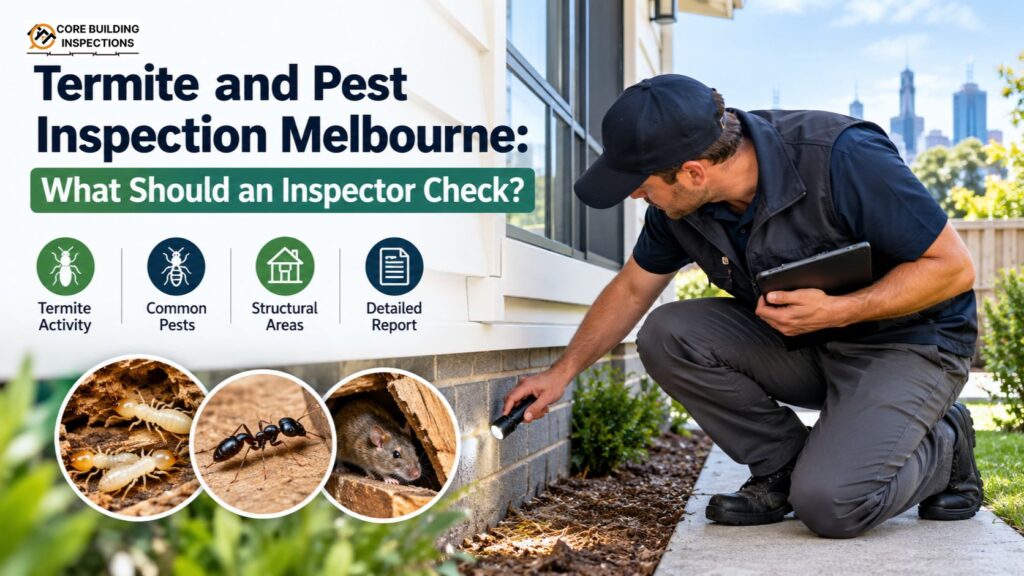
Among all the pests that can invade a residential property, none pose a more severe structural or financial threat than subterranean termites. These highly organized insects live in vast underground colonies and travel silently through the soil in search of cellulose, which is the primary structural component of timber. Because termites require a high-moisture environment to survive, they construct intricate mud tracking tubes to bridge the gap between the damp earth and the dry framework of a house. Once inside, they feed on structural wall studs, floor joists, and roof trusses from the inside out. They intentionally leave a paper-thin layer of wood veneer or paint intact on the exterior to protect themselves from light and open air, meaning a structural timber bar can look completely sound to a casual observer even when it is hollowed out and on the verge of collapse. Left undetected, a severe termite infestation can cause devastating structural damage that standard home insurance policies completely exclude, leaving unsuspecting owners with staggering repair bills.
Stopping Pest Ingress with Pre Slab Pour Inspections
Protecting a property from subterranean pests is a process that should ideally begin long before the first frame is erected or the walls are lined with plasterboards. In modern construction, the foundation stage presents a critical opportunity to establish an unbreakable barrier against future invaders. Arranging independent pre slab pour inspections ensures that your building’s baseline defenses are installed perfectly down to the millimeter. Before the concrete trucks arrive on-site, a specialized structural auditor reviews the entire footprint of the foundation. They check that the heavy-duty plastic damp-proof membrane is completely unpunctured and tightly sealed around all pipe penetrations, as even a tiny tear in the plastic can allow subterranean pests and ground moisture to seep upward into the home. Furthermore, the inspection verifies that the mandatory physical termite collars are fitted securely around every single plumbing rough-in pipe. Once thousands of liters of liquid concrete are poured over these components, they are permanently set in stone; getting these details right early prevents pests from utilizing plumbing gaps as a hidden superhighway straight into your living spaces.
Evaluating the Skeleton During a Building Frame Inspection
As a construction project transitions from the ground up, the timber or steel skeleton of the home becomes the next major focus of quality control and pest prevention. Booking a professional Building Frame Inspection allows you to verify the structural integrity of the home’s primary load-bearing elements while they are completely exposed and accessible. During this milestone evaluation, an independent specialist methodically checks the structural framing timber for any pre-existing imperfections, structural warping, or non-compliant trade installations. For properties utilizing timber framework, this is a vital moment to confirm that the builder has used treated timber, which is infused with specific pest-resistant compounds designed to deter wood-destroying insects. The auditor also checks the frame for any signs of early wood-decay fungi or moisture retention caused by exposure to sudden rainstorms during the building process. Catching and correcting frame defects at this point ensures the home’s skeleton remains strong, straight, and inherently hostile to future pest colonies.
Final Safeguards Before Walls are Sealed: Pre-Plaster House Inspection
The final window of absolute transparency during a new build occurs just before the internal walls are covered up with plasterboards. Securing a detailed Pre-Plaster House Inspection ensures that no hidden defects, compromised wiring lines, or pest vulnerabilities are permanently buried out of sight behind the walls. Once the plasterboard is installed, the internal wall cavities become dark, enclosed zones that are incredibly difficult to monitor, making them the preferred nesting spaces for household pests. During a pre-plaster review, the inspector examines the entire internal cavity, checking that all plumbing connections are completely watertight and that no slow, silent leaks are present. Even a minor weep from a water pipe can create a localized zone of high humidity and damp timber behind the plaster, which acts as a powerful beacon for termites and toxic mold growth. Ensuring that wall cavities are dry, clean, and fully compliant before the plasterers lock the walls away gives you a final, vital layer of structural security.
Wood-Boring Beetles and Fungal Timber Rot
While termites command the most attention due to their destructive speed, they are not the only wood-destroying organisms that plague local properties. Wood-boring beetles, such as the Anobiid or Powder Post borer, are a common hazard, particularly in older heritage homes across established suburbs. These beetles lay their eggs in unsealed structural timbers, and their larvae chew complex tunnels through the wood over several years before emerging through distinct, tiny “exit holes,” slowly reducing the strength of the structural timber bearers. Simultaneously, wood-decay fungi—commonly known as timber rot or dry rot pose a widespread threat wherever moisture is allowed to pool against wood surfaces. Timber rot occurs when structural wood retains a high moisture content due to poor subfloor ventilation, leaking shower trays, or broken garden drainage lines. The fungi break down the cellular structure of the timber, causing it to crack, crumble, and lose all its load-bearing capacity. Crucially, damp, rotting wood releases specific chemical scents that attract foraging termite scouts, meaning a moisture problem almost always paves the way for a secondary insect infestation.
The Impact of Local Volatile Soils and Environmental Hazards
The specific geographic location of a property can heavily influence its vulnerability to structural pest invasions. Many northern and western suburban sectors feature highly reactive volcanic basalt clay soils. These clay profiles expand massively during wet winters and shrink rapidly during dry summer droughts, putting significant physical stress on concrete footings and brick veneer walls. When a foundation experiences uneven ground movement due to reactive soil shifting, it can develop structural cracks. These tiny fractures in a concrete slab or brick wall path might seem minor on the outside, but they provide a perfect, protected entryway for subterranean insects to enter the home undetected. Furthermore, properties with traditional timber floor stumps sitting directly in damp ground are at an elevated risk, as the wood stumps create a direct bridge from the subterranean nest straight into the subfloor framing. Understanding these localized soil behaviors allows professional inspectors to focus their search on the highest-risk areas of the allotment.
Gaining Decisive Power Through Comprehensive Defect Registers
Investing in an independent property report provides immense financial and legal protection, whether you are buying an established home or managing a new construction project. A comprehensive, photographic digital defect register serves as an unbiased mirror of the home’s actual condition, completely cutting through optimistic real estate marketing spin or rushed building schedules. When your legal conveyancer or solicitor is armed with an independent assessment detailing active pest colonies, severe timber rot, or structural code non-compliance, the balance of power shifts completely in your direction. For established buyers, you can use the report’s evidence to negotiate a direct price reduction from the vendor to cover upcoming treatment and framing maintenance, or require the seller to completely eradicate the pests via a certified technician before settlement. For new home builders, it provides the definitive proof needed to compel your builder to halt construction and rectify framing or plumbing errors before moving to the next stage, ensuring your consumer rights are fully protected.
Why Choose Core Building Inspections to Protect Your Home
When it comes to safeguarding your family’s future and your largest financial asset, you need an independent professional team that refuses to cut corners. Core Building Inspections stands out as Victoria’s premier choice for comprehensive property due diligence and stage audits. Every single assessment we perform is completed by fully qualified, insured construction practitioners officially registered with the Victorian Building Authority (VBA). This registration ensures that your finished digital report carries full legal weight and complies completely with all relevant Australian Standards. We maintain absolute strategic independence from real estate networks, volume builders, and finance brokers, meaning our field technicians work 100% in your corner. We know that property markets and construction timelines move rapidly, which is why our streamlined framework guarantees a rapid 24-hour turnaround. We deliver an itemized, clear plain-English report with high-resolution photography straight to your inbox within 24 hours of finishing our on-site physical survey, giving your team the clear evidence needed to buy or build with absolute confidence.
Frequently Asked Questions:
Q: What are the main differences between standard building reviews and specialized timber pest checks?
A standard structural review evaluates the general construction quality, safety hazards, and stability of the home’s foundations, external masonry, and wet area plumbing. A specialized timber pest check is a separate biological review that focuses entirely on locating subterranean termites, wood-boring beetles, fungal timber rot, and active environmental conditions—like high moisture or poor airflow that invite wood-destroying insects into the structure. Choosing comprehensive Termite and Pest Inspection Services melbourne options ensures your asset is protected against both structural movement and biological threats.
Q: Can a vendor or builder hide termite activity from a professional investigator?
While a builder or vendor might try to mask surface imperfections with a fresh coat of cosmetic paint or strategic clutter, they cannot hide the internal heat signatures, moisture profiles, or acoustic anomalies left by active pests. Certified inspectors utilize high-sensitivity thermal imaging cameras and electronic moisture sensors to look past surface aesthetics, exposing the true state of the internal framing.
Q: How long does a comprehensive residential stage check or pest review take on-site?
On average, a licensed VBA inspector spends between 1.5 to 3 hours thoroughly auditing a standard residential property on-site. This timeframe can vary slightly depending on the layout size of the home, the specific construction stage being evaluated, and the physical accessibility of the roof cavity and subfloor crawlspaces.
Q: Should I rely on an inspection report provided directly by the seller or builder?
No, it is always highly recommended to arrange your own independent report. A report provided by a party with a financial interest in the sale or build can carry an inherent conflict of interest. Having your own independent professional on-site is the only way to ensure complete transparency, full professional indemnity protection, and absolute peace of mind.
Secure Your Property’s Future from a Position of Absolute Strength
Do not leave the structural security and safety of your largest financial investment to visual guesswork, clever staging, or a rushed building schedule. Ensure your property is structurally sound, straight, dry, and completely free of destructive timber pests before you make your next payment. Secure your absolute peace of mind by booking your comprehensive property audit today with Core Building Inspections.