Victoria Pre-Purchase House Inspection Before Buying Property

New Home Pre-Handover Inspections Melbourne
June 18, 2026
Key Benefits of Professional Pre Slab Pour Inspections
June 23, 2026
Stepping into the property market in Victoria is a thrilling adventure, but it is also one of the heaviest financial commitments you will ever make. Whether you are eyeing a charming heritage Edwardian villa in an inner Melbourne suburb or signing a contract for a sleek, contemporary townhouse in a rapidly developing regional hub, it is easy to let emotion take the driver’s seat. During a busy weekend open-for-inspection, a home can look absolutely flawless. Strategic staging, fresh cosmetic renovations, and a strategic coat of paint can instantly transform a space. However, those beautifully styled rooms can easily mask severe, deep-seated flaws that remain hidden from an untrained eye. In Australia, the real estate landscape operates firmly under the principle of caveat emptor or buyer beware. Once the final contracts are signed, the settlement funds are transferred, and the keys are in your hand, any pre-existing structural damage or pest infestations become your legal and financial responsibility. Standard home insurance policies strictly exclude pre-existing issues and timber pest destruction, leaving unprotected buyers vulnerable to staggering out-of-pocket repair bills. Arranging an independent Victoria pre-purchase house inspection is your ultimate safety net. It provides total transparency, revealing the true physical health of the building before you commit your life savings.
Uncovering Hidden Structural Risks and Deficiencies
The true value of a professional property health check is its power to identify defects that escape casual observers. Homes are intricate engineering systems. A hairline crack in an internal wall, a slight bounce in the floorboards, or a door that sticks in its frame might seem like minor quirks, but they are often early warning signs of major foundational failure. Qualified building experts do not just check if the property looks nice; they inspect the building skeleton to verify compliance with Australian Standard AS 4349.1-2007. Sinking floor stumps, decaying structural bearers, and sagging roof trusses can cause uneven weight distribution across the property. When load-bearing walls begin to warp under this stress, it forces the internal plasterboard to crack and causes external brick veneer paths to separate over time. By deploying specialized field equipment like digital spirit levels, thermal imaging cameras, and moisture meters, inspectors can track down hidden water leaks, identify sinking stumps, and spot structural framing movement before it leads to a catastrophic collapse. Finding these major structural issues early prevents you from stepping into a financial trap, allowing you to walk away or budget for repairs realistically.
The Crucial Need for a Pre-Buy Home Inspection Melbourne
For buyers looking closely at the metropolitan market, securing a tailored Pre-buy home inspection Melbourne audit is absolutely essential to address regional building risks. Many inner-city properties feature beautiful heritage brickwork and sprawling floor plans, but they also sit on old foundational styles that are vulnerable to decades of ground movement. Conversely, newer developments in the outer growth corridors are often rushed through compressed construction timelines, frequently resulting in non-compliant trade installations and missed structural connections. A major geographical hazard unique to parts of Victoria is the presence of highly reactive clay soils, particularly the volcanic basalt clays found across Melbourne’s northern and western suburbs. This soil profile acts like a giant sponge expanding massively during wet winter periods and shrinking rapidly during hot summer droughts. When perimeter drainage is poorly managed, or when stormwater pipes leak directly into the ground, the uneven soil pressure triggers a destructive process known as slab heave. This upward movement cracks concrete slabs, breaks internal plasterboard, and creates severe step-cracking along external brickwork. A local expert knows exactly what regional red flags to look for, protecting your investment from devastating foundational failures.
Safeguarding Your Framing with an Essential Pest Assessment
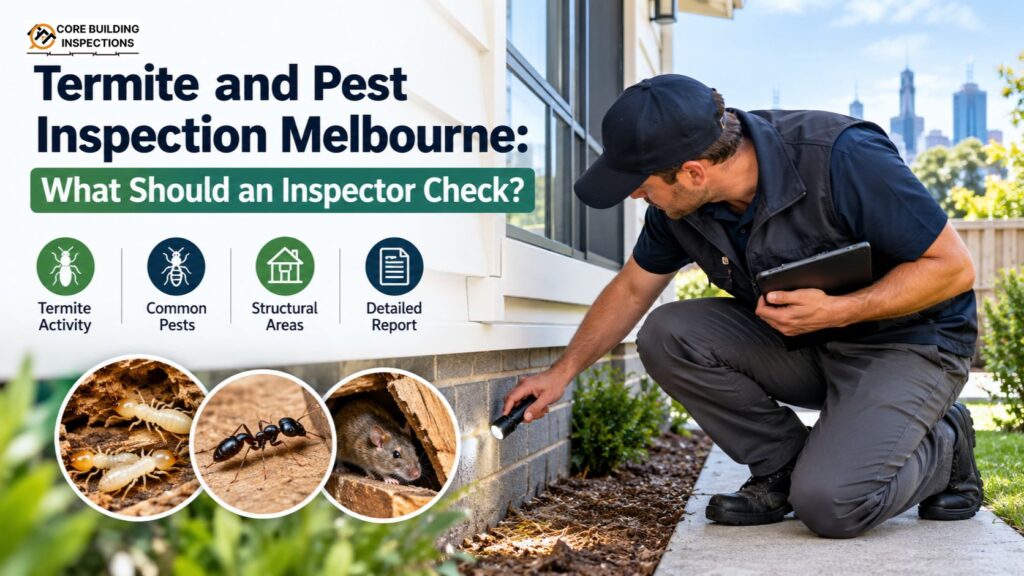
While checking the concrete and timber framework is vital, structural faults are not the only threat that can compromise a property from the inside out. Victoria’s varying seasonal climate, damp winter soil conditions, and widespread use of softwood framing make residential homes primary targets for wood-destroying insects. Subterranean termites are incredibly destructive pests that travel silently from underground colonies through mud tracking tubes to feast on cellulose-rich timber framing. They hollow out load-bearing wall studs and roof trusses from the inside out, leaving the exterior wood looking perfectly normal until the frame begins to sag. By booking a comprehensive Pre-purchase pest inspection Victoria buyers can sleep easily knowing their future home’s timber skeleton has been thoroughly screened. Certified timber pest technicians use non-invasive technology—including high-sensitivity thermal sensors and acoustic detection tools—to track down hidden colonies, trace past borer damage, and pinpoint wood decay fungi behind plasterboards. Furthermore, the inspection highlights environmental risk factors, such as poor subfloor ventilation, leaking garden taps, or garden mulch piled against brick weep holes, which actively invite termites into the property. Catching these risks early saves you from inheriting an unstable timber structure that could cost tens of thousands of dollars to fix.
Five Critical Inspection Zones Addressed in a Comprehensive Report
A trusted, professional property health check leaves absolutely zero blind spots, methodically auditing five primary structural zones in accordance with Australian Standards:
-
Internal Living Spaces & Wet Areas: Inspectors systematically move room by room, checking wall alignments, monitoring window operations, and using electronic moisture scanners behind tiled bathroom walls to catch hidden waterproofing failures before they rot subfloor framing.
-
The Roof Cavity Space: Field teams climb directly into the ceiling void to evaluate the roof’s structural framing skeleton. They look closely for sagging roof trusses, compromised insulation layouts, unlinked bathroom exhaust fans, and active under-roof leaks.
-
Accessible Subfloor Voids: Where safe physical crawlspaces exist, inspectors drop beneath the flooring to examine the condition of supporting concrete stumps, subfloor brick piers, timber bearers, soil dampness, and localized airflow blockages.
-
Exterior Building Envelopes & Cladding: The external walls, brick veneer masonry, and lintels are inspected for stress fractures, step-cracking, weathering damage, and non-compliant weep hole blockages.
-
Exterior Roof Platforms & Allotment Drainage: Using professional ladders, inspectors check the integrity of concrete roof tiles, corrugated metal sheets, ridge capping mortars, valley gutters, and perimeter downpipe compliance to ensure stormwater drains safely away from the foundations.
Gaining Powerful Contractual Leverage for Price Negotiations
Investing in an independent property report provides immense financial and legal leverage during contract negotiations. A comprehensive, photographic digital defect register serves as an unbiased, factual mirror of the home’s actual condition, counteracting optimistic real estate marketing spin. When your legal conveyancer or solicitor is armed with an independent assessment detailing major defects or code non-compliance, the balance of power shifts completely in your direction. You can use the report’s evidence to negotiate a direct price reduction from the vendor to cover upcoming maintenance, or include a special contract condition requiring the seller to fix specific structural problems via a licensed builder prior to settlement. Alternatively, if the repair bills are simply too high, it gives you the clear legal grounds needed to exit the contract entirely while protecting your hard-earned deposit.
Why Choose Core Building Inspections to Protect Your Investment
When it comes to safeguarding your family’s future, you need a team that prioritizes technical accuracy and absolute customer care. Core Building Inspections stands out as Victoria’s trusted name for independent property due diligence. Every single building and pest assessment we conduct is executed by fully qualified, insured construction practitioners officially registered with the Victorian Building Authority (VBA). This registration means your finished digital report carries full legal weight and complies completely with all relevant Australian Standards. We maintain absolute strategic independence from real estate agencies, volume builders, and finance brokers, meaning we work strictly for you—the property buyer. Because real estate markets move rapidly, our streamlined framework guarantees a rapid 24-hour digital turnaround. We deliver an itemized, clear plain-English report with high-resolution photography straight to your inbox within 24 hours of finishing our on-site physical survey, giving your legal team the clear evidence needed to negotiate with confidence.
Frequently Asked Questions:
Q: What is the difference between a standard building check and a pest assessment?
A standard Pre-purchase building inspection focuses on the structural integrity, safety hazards, and trade workmanship compliance of the home’s foundations, framing, exterior masonry, and wet areas. A pest check is a separate, highly specialized biological assessment designed to locate subterranean termites, wood-boring beetles, fungal decay, and active environmental conditions that invite wood-destroying insects. Bundling both services ensures complete protection for your prospective investment.
Q: Can a vendor or real estate agent refuse access to an independent inspector?
No. Under standard Victorian Contract of Sale conditions, a property buyer is legally entitled to include a “subject to building and pest inspection” clause. This clause grants safe, reasonable on-site access to you and your nominated independent building inspector during the designated contract window.
Q: How long does a professional residential inspection take on-site?
On average, our licensed VBA inspectors spend between 1 to 2 hours thoroughly checking a standard residential property on-site. This timeframe can vary slightly depending on the layout size, the age of the building, and the physical accessibility of the roof cavity and subfloor crawlspaces.
Q: What happens if the report uncovers severe structural defects or termite activity?
If the report uncovers major structural defects or active pest infestations, your conveyancer can use our photographic digital register to negotiate a lower purchase price, request the vendor treat and repair the issues prior to settlement, or exit the contract entirely to save your deposit.
Q: Should I rely on a building inspection report provided by the vendor?
No, it is highly recommended to arrange your own independent report. A report provided by the seller or real estate agent may carry a conflict of interest or lack professional indemnity insurance protection for you as the eventual buyer. Having your own independent professional on-site is the only way to ensure absolute transparency.
Finalize Your Property Contract From a Position of Absolute Strength
Do not leave the structural security of your largest financial investment to visual guesswork, clever staging, or a rushed open-house walk-through. Ensure your new home is safe, sound, straight, and fully code-compliant before you buy. Secure your absolute peace of mind by booking your comprehensive property audit today with Core Building Inspections.