Top Termite and pest inspection Melbourne

Best Building and Pest Inspection in Melbourne
June 7, 2026
Best Pre-Purchase Building Inspection in Melbourne
June 9, 2026
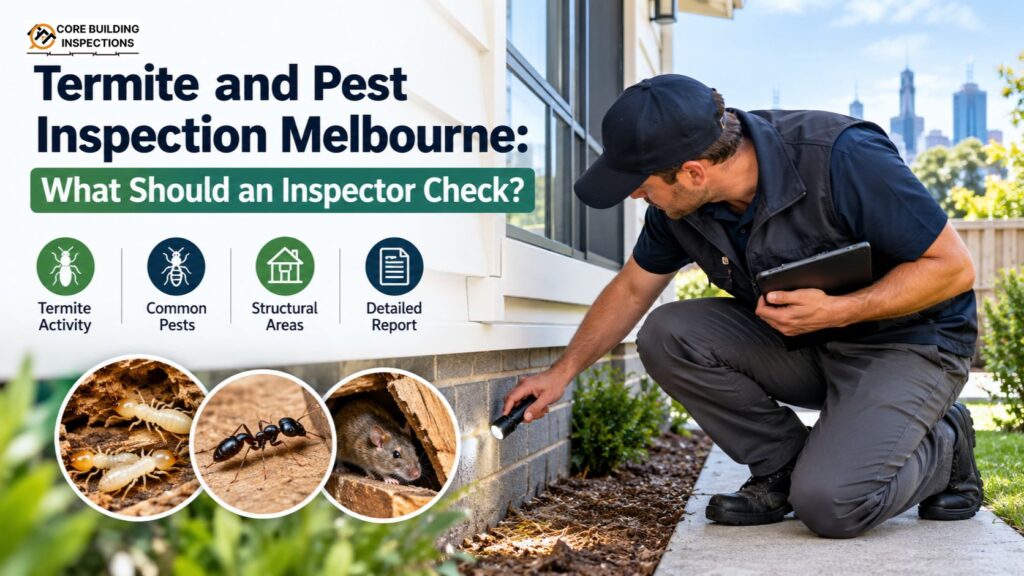
Purchasing a residential property, managing an established family estate, or securing a high-density commercial development across Victoria involves major financial risk. While a building might feature an immaculate facade during an initial walkthrough, destructive wood-boring insects can quietly hollow out the structural core of the asset from within. Left unchecked, a hidden biological infestation can compromise load-bearing subfloor elements and roof framing skeletons, resulting in massive out-of-pocket repair costs that standard home and contents insurance policies explicitly exclude. To gain absolute clarity on the physical health of your investment, arranging a comprehensive termite and pest inspection in melbourne is a critical line of defense. Independent property checks look far past basic visual cleanliness to locate active timber pest networks, historical borer damage, and environmental dampness vectors that invite wood-destroying organisms. By choosing a thorough, independent property audit, property owners ensure they uncover hidden structural vulnerabilities before minor issues transform into structural liabilities.
The Hidden Biology of Subterranean Timber Destruction
Understanding the destructive nature of wood-destroying insects requires analyzing the behavioral traits of the aggressive native subterranean termites (Coptotermes acinaciformis) active across the state. These pests do not live inside the house wood itself; instead, they build complex reproductive colonies deep within the surrounding ground soil. Because they have soft, translucent bodies that quickly dry out and die when exposed to open air or low indoor humidity, they build covered mud shelter tubes to travel from the dirt up into your home’s framing. These mud tracking galleries allow worker insects to travel long distances through concrete slab cracks, along internal plumbing lines, and behind finished drywall completely undetected. Because they eat cellulose structures from the internal core outward, structural timber beams can appear completely normal from the outside while being hollowed out to a wafer-thin paper shell. The aggressive reproduction rate of a single mature queen means a colony can compromise a standard roof truss configuration or subfloor platform within a surprisingly short timeframe, making professional detection systems essential for early property protection.
Technical Diagnostic Tools Used for Forensic Pest Tracking
Modern, certified inspection teams completely bypass the old-fashioned, unreliable method of simply tapping on timber skirting boards with a screwdriver. Today, field technicians utilize highly precise, computer-aided diagnostic hardware to examine your property from boundary to boundary without causing damage to the finished plasterboards or wood liners:
-
High-Sensitivity Thermal Imaging Cameras: Maps subtle surface temperature variations across internal linings, exposing hidden biological nesting zones as clear thermal hotspots generated by the pests’ collective metabolic heat.
-
Electronic Moisture Mapping Sensors: Instantly pinpoints unusual high-humidity zones inside wall cavities and behind bathroom tiles, locating the hidden water leaks that draw foraging colonies.
-
Acoustic Radar Detection Devices: Translates microscopic vibrations and tapping sounds made by soldier termites deep within structural wood framing into clear digital signals.
-
Miniature Borescope Inspection Probes: Guides flexible optical lenses directly into tight subfloor voids, structural wall cavities, and ceiling spaces to visually confirm the presence of mud tubes.
Navigating Volatile Regional Soils and Construction Hazards
Property buyers must navigate specific geographical and geological challenges that make a comprehensive termite and pest inspection in victoria an absolute necessity during any real estate transaction. Massive portions of the outer growth corridors sit directly on top of highly volatile, reactive volcanic basalt clay profiles, which are officially classified as Class H1 and H2 engineering sites. This soil profiles behaves exactly like a giant sponge expanding significantly during heavy winter rains and contracting sharply during dry summer heatwaves. This constant ground shifting puts immense stress on concrete house slabs, frequently triggering hairline cracks and shifting foundation footprints. These structural fractures provide subterranean pests with a direct, completely hidden entry path from the underlying dirt straight into your internal load-bearing walls. Furthermore, properties built close to established timber parklands, historic rail corridors, or old industrial storage sites face a much higher risk of pest migration, requiring deep, localized structural awareness to ensure the home’s foundational barriers remain unbroken.
Complete Structural Overview: From Foundation Stumps to Roof Ridges
When you invest in a professional property audit, our licensed field specialists conduct an exhaustive on-site review across all primary structural zones rather than relying on brief visual checklists. Within the internal living environments, we test wall straightness, map floor levels, and screen wet areas to catch concealed waterproofing failures. Externally, we check brick veneer lines for stress fractures, inspect window flashing seals, evaluate retaining walls, and review perimeter land grading to ensure surface stormwater drains far away from the foundations. We climb directly up into the roof cavity space to structurally analyze the timber skeleton, tracking down bowed trusses, damaged insulation blankets, unlinked exhaust flues, and roofing leaks. Finally, where accessible subfloor voids exist, we drop underneath the floors to inspect the condition of concrete supporting stumps, subfloor brick piers, timber bearers, and soil humidity levels to make sure the primary platform is completely stable. This complete top-to-bottom survey leaves zero blind spots across your entire asset footprint.
Why Choose Core Building Inspections for Independent Property Protection
As the region’s trusted name for uncompromised buyer advocacy and independent property due diligence, Core Building Inspections offers a premier, customer-focused inspection framework built around absolute technical excellence. Every single structural and timber pest survey we execute is completed by fully qualified, insured construction practitioners officially registered with the Victorian Building Authority (VBA). This ensures that your finalized digital report carries full legal weight and complies with all relevant Australian Standards, including AS 4349.1 and AS 4349.3. We maintain absolute strategic independence from local real estate agencies, volume construction builders, and finance brokers, meaning we work strictly for you—the investor. Because property transactions move incredibly fast, our streamlined process guarantees a rapid 24-hour digital turnaround. We deliver your fully itemized, photographic digital defect register straight to your inbox within 24 hours of finishing our on-site physical survey. Written in clear, concise plain English without dense trade jargon, our reports prioritize every single flaw found, giving your conveyancing team the powerful leverage required to demand vendor price cuts or walk away from a compromised contract.
Frequently Asked Questions: Expert Property Protection in Victoria
Q: What is the difference between a building inspection and a timber pest check?
A: A building inspection focuses entirely on the structural safety, compliance, and trade workmanship quality of the home’s foundations, external masonry, wet areas, and framing skeleton. A pest check is a separate, highly specialized biological assessment designed to locate active subterranean insects, historical wood-borer damage, fungal wood rot, and active environmental conditions that make a home’s structure vulnerable to an attack. Combining both assessments into a single visit ensures complete protection for your investment.
Q: What happens if the digital report uncovers active wood-boring pests?
A: If your property report uncovers active wood-destroying pests or severe structural damage, you hold strong legal leverage. Depending on the special conditions drafted into your formal Contract of Sale, your legal conveyancer or solicitor can use our comprehensive, photographic digital defect register to renegotiate the final purchase price, demand the vendor execute professional treatment and structural repairs via a licensed builder prior to settlement, or exit the contract entirely to protect your deposit.
Q: How long does a standard residential property check take on-site?
A: On average, our licensed VBA inspectors spend approximately 1 to 2 hours thoroughly checking a standard residential property on-site. This timeframe can vary slightly depending on the size of the building layout, the age of the house, and the physical accessibility of the roof cavity spaces and subfloor voids. We welcome clients to attend the property walkthrough so our field experts can show you any major defects or maintenance hazards immediately after completing the physical survey.
Finalize Your Property Contract From a Position of Absolute Strength
Do not leave the structural security of your largest financial investment to visual guesswork or temporary DIY fixes. Ensure your asset is safe, sound, and fully code-compliant before you buy. Secure your peace of mind by booking your comprehensive property audit today with Core Building Inspections.