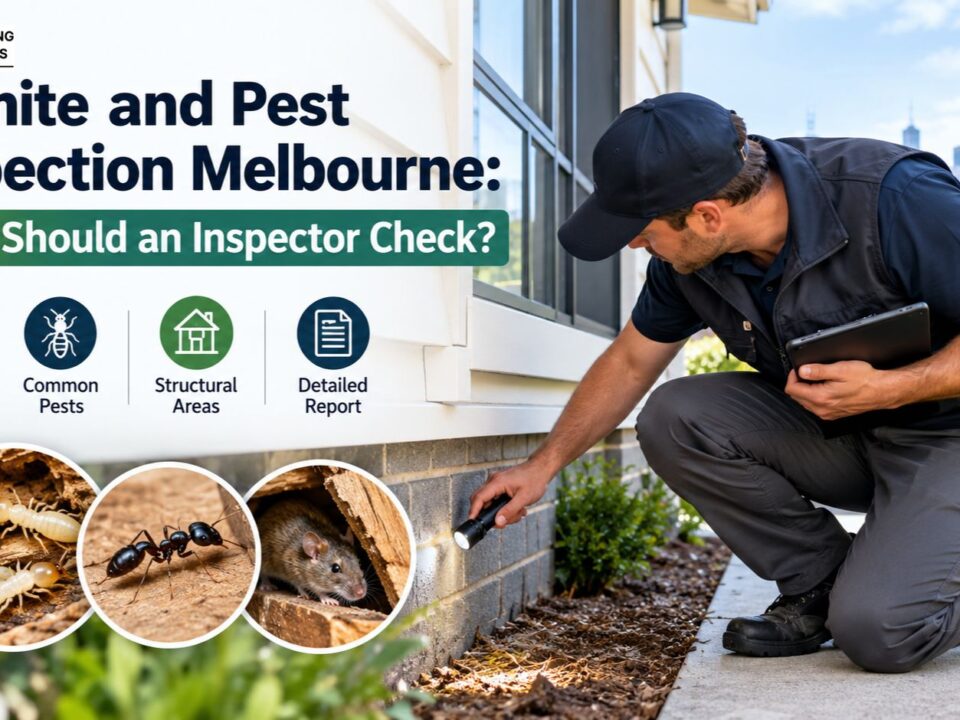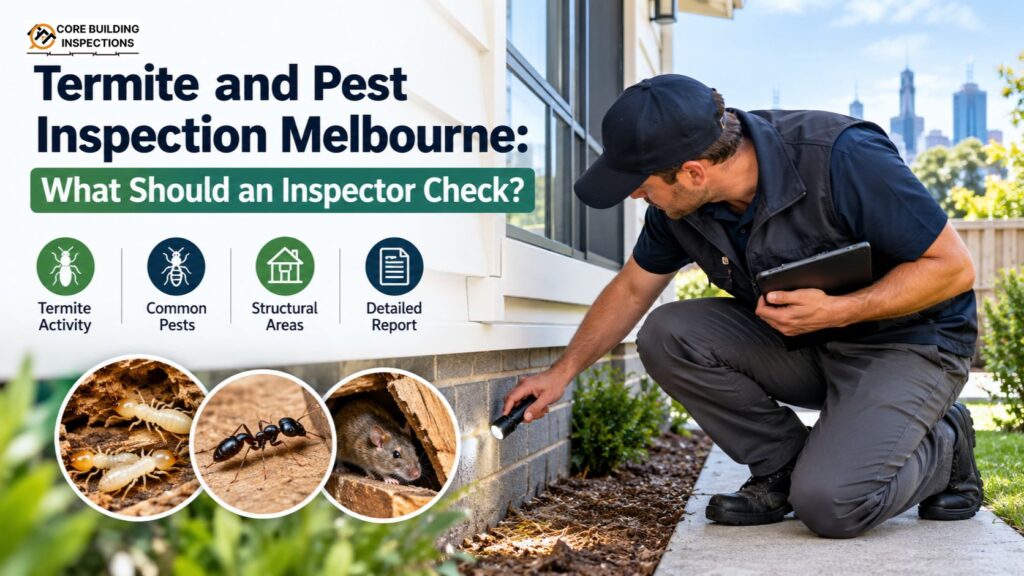
Termite and Pest Inspection in Victoria: 5 Red Flags Your Inspector Must Find

Pre-Purchase Building Inspection: Reveal Hidden Moisture and Termites
April 18, 2026
Building Inspection Company Melbourne: Core Building Inspections
April 22, 2026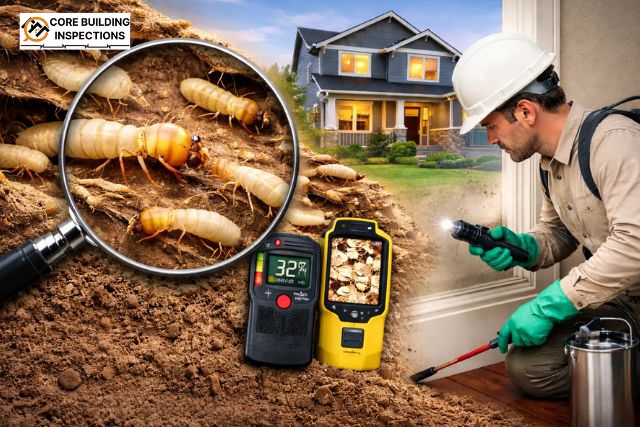
For Melbourne homeowners and property investors in 2026, the threat of timber-destroying organisms is a high-stakes reality. Victoria’s unique climate—characterized by damp winters and increasingly humid summer spells creates a perfect breeding ground for subterranean termites. These “silent destroyers” can compromise the structural integrity of a building long before any outward signs become visible to the untrained eye. A professional termite and pest inspection in victoria is not just a box to tick during a property transaction; it is a critical diagnostic process that requires specialized knowledge of local ecology and modern building construction. If your inspector isn’t looking for specific, subtle indicators of activity, you could be inheriting a financial disaster.
The Stealthy Nature of Victorian Termites
Subterranean termites (specifically the Coptotermes species) are the most economically significant wood-destroying pests in Australia. Unlike the drywood termites found in tropical climates, Victorian termites live in large colonies underground and build “mud tunnels” to reach their food sources above the soil. They are incredibly stealthy, often entering a home through microscopic cracks in concrete slabs or hidden gaps behind garden beds. Because they consume wood from the inside out, a timber beam can look perfectly solid while being completely hollowed out. This makes a comprehensive termite and pest inspection Melbourne experts provide absolutely essential for anyone buying or maintaining a property in the region.
1: Active Mud Tracking and Shelter Tubes
The first and most obvious red flag is the presence of mud shelter tubes. Termites are soft-bodied insects that require a high-humidity environment to survive; exposure to the open air can quickly dehydrate and kill them. To travel from their underground nests to the timber inside your home, they construct narrow tunnels made of a mixture of soil, saliva, and excrement. Your inspector should meticulously check the perimeter of the slab, the weep holes in the brickwork, and the subfloor piers for these telltale brown streaks. If these tubes are found, it is an immediate sign that a colony has bypassed your physical barriers and is actively feeding on your home’s structure.
2: High Moisture Anomalies in Wet Areas
Termites don’t just happen by accident; they are attracted to moisture. A slow leak behind a shower wall or a faulty gutter that causes water to pool at the base of the house creates an “invitation” for a colony to move in. In 2026, advanced inspectors use thermal imaging cameras and moisture meters to find these “conducive zones.” If your inspector identifies a high moisture reading in a wall cavity, it is a significant red flag. Not only does this indicate potential timber rot, but it also marks the exact spot where termites are most likely to congregate. A smart buyer knows that a moisture problem is almost always a precursor to a pest problem.
3: Hollow-Sounding Timbers and Skirting Boards
One of the most effective tools in an inspector’s kit is a simple sounding device. By tapping on skirting boards, door frames, and exposed structural beams, a professional can hear the difference between solid timber and wood that has been eaten away. A hollow or papery sound is a major red flag indicating that the internal sapwood has been consumed, leaving only a thin veneer of paint or wood on the outside. In some extreme cases, the wood may even feel soft or spongy to the touch. If your inspector isn’t physically testing the density of the timbers throughout the home, they are missing the most common sign of advanced infestation.
4: Discarded Alate Wings Near Light Sources
During the humid “swarming” seasons in Melbourne, reproductive termites (known as alates) fly out to start new colonies. These winged termites are often mistaken for flying ants, but they leave behind a specific clue: their wings. After finding a mate, the termites shed their wings and begin the process of tunneling into the ground or into wood. Finding piles of small, translucent wings on windowsills or near external light fixtures is a red flag that a colony is mature and actively looking to expand its footprint on the property. This is a sign that the local “termite pressure” is high and that immediate preventative measures are required.
5: Inadequate Subfloor Ventilation and Debris
For homes with a crawl space, the subfloor is the front line of the battle against pests. An inspector must flag any area where there is inadequate ventilation or where stored timber is in direct contact with the ground. Old stumps, cardboard boxes, or firewood stored under a house act as “bridges” that allow termites to bypass chemical barriers. If the subfloor is damp and cluttered, it is a massive red flag. Improving airflow and removing cellulose-based debris are the first steps in making a property less attractive to pests, but these issues are often overlooked by less experienced auditors.
Why Independent Technical Advice Matters
At Core Building Inspections, we believe that a pest report should be as detailed as a structural audit. We don’t just look for bugs; we look for the systemic failures in a building’s design that allow pests to thrive. By identifying these five red flags early, we empower you to demand professional treatment or price negotiations before you are legally committed to the purchase. Our 2026 reporting standards include high-resolution photography and thermal evidence, giving you the peace of mind that no “hidden” colonies are eating away at your future equity.
Conclusion: Don’t Let Your Investment Be Eaten Away
The Victorian property market is too competitive to leave your due diligence to chance. Termites can cause tens of thousands of dollars in damage in a remarkably short period, and most standard home insurance policies do not cover pest-related structural failure. By ensuring your inspector finds and explains these critical red flags, you protect your family’s safety and your financial health. Secure your home with the technical expertise it deserves.