The Critical 5: Essential Stage Inspections Every New Home Builder Needs

5 Mistakes to Avoid When Hiring a Building Inspection Company Melbourne
January 23, 2026
The Ultimate Checklist for Your Pre-Buy Home Inspection Melbourne
January 28, 2026
Building a new home is one of life’s most exciting journeys. It’s a chance to create a space that is uniquely yours, designed to fit your lifestyle perfectly. But let’s face it: the construction process can also be incredibly stressful.
With hundreds of tradespeople on-site, tight deadlines, and complex building codes to adhere to, mistakes happen. A rush to pour concrete might mean the steel reinforcement isn’t tied correctly. A hurried carpenter might leave a wall out of plumb. If these issues aren’t caught early, they get covered up by plaster and brick, sitting silently until they cause major structural headaches years down the track.
This is why relying solely on your builder’s “private surveyor” is often not enough. To truly protect your investment, you need an independent advocate.
In Victoria, the gold standard for quality control is a series of checks known as building frame inspection Victoria. These occur at five specific milestones during construction. Here’s what you need to know about those five inspections to keep your home from going wrong.
1. Base Stage (Pre-Pour) Inspection
The Foundation of Everything
This is arguably the most critical day of the entire build. Once the concrete is poured, you can never see the foundations again. If mistakes are made here, they are permanent.
During the Base Stage inspection, we visit the site just before the concrete trucks arrive. We aren’t looking at the wet concrete; we are looking at the preparation.
What we check:
-
Vapor Barriers: Ensuring the plastic membrane is intact to prevent rising damp.
-
Steel Reinforcement: Checking that the steel mesh and bars are the correct size, grade, and spacing as per the engineering plans.
-
Termite Protection: verifying that collars are installed on pipe penetrations.
-
Formwork: Ensuring the dimensions of the slab are accurate.
This inspection ensures your home starts on solid ground—literally.
2. Frame Stage Inspection
The Skeleton of the Home
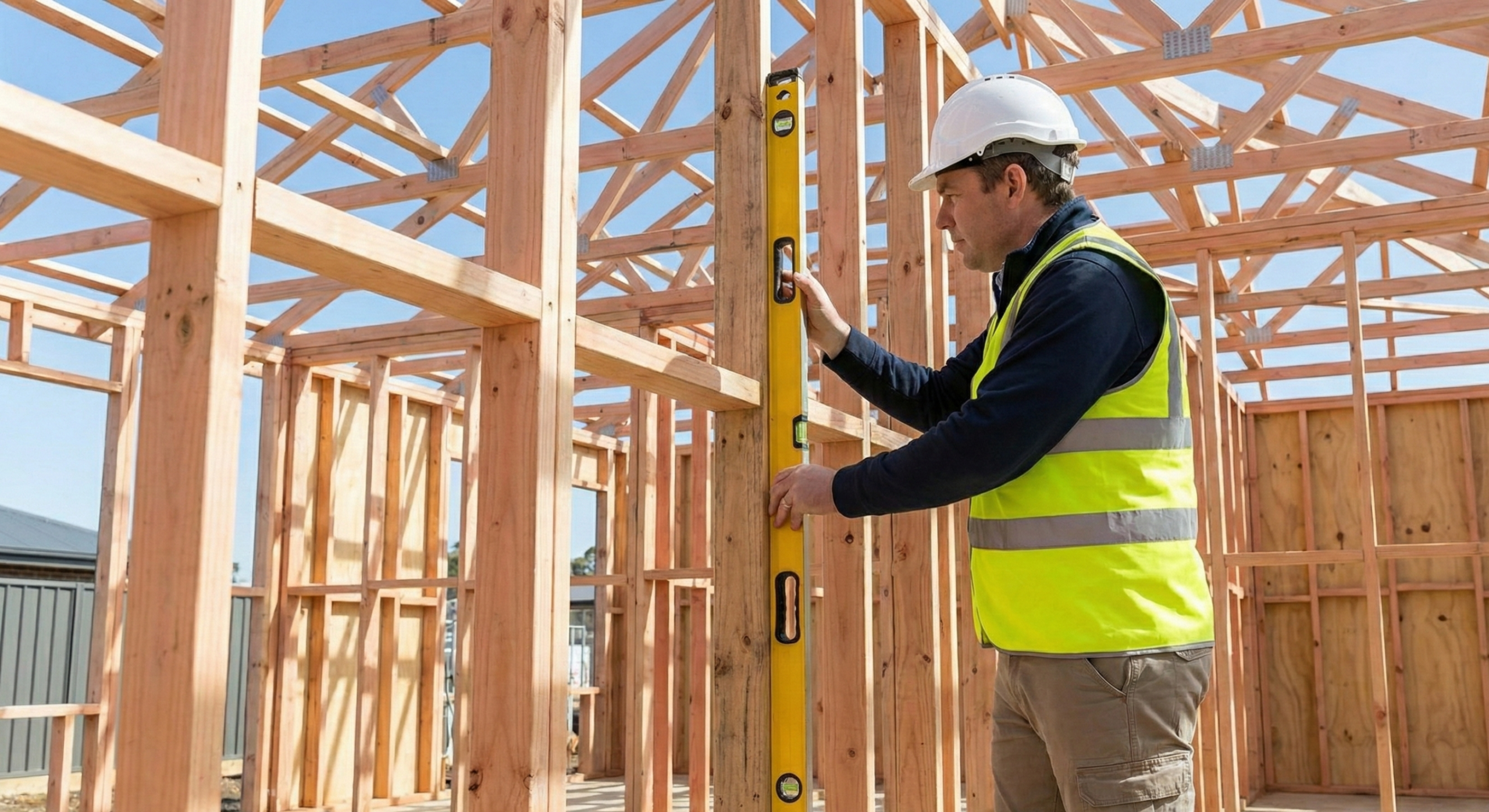
Once the slab is down, the timber or steel frame goes up. This is the skeleton of your house. If the “bones” are crooked, everything that follows—plaster, cabinetry, tiling—will be crooked too.
The Frame Stage inspection happens after the roof trusses are on and the frame is complete, but before the external cladding or roof tiles are installed.
What we check:
-
Structural Integrity: Ensuring all load-bearing walls and bracing are installed correctly.
-
Plumb and Level: We check that walls are straight and square. A wall leaning even a few millimeters can cause doors to jam and plaster to crack later.
-
Tie-Downs: Verifying that the roof is securely tied to the walls to withstand wind loads.
Catching a bowed wall now is a quick fix for a carpenter. Fixing it after the plaster is painted is a major demolition job.
3. Lock-Up Stage Inspection
Making it Watertight
“Lock-up” generally means the home is now secure and weatherproof. The roof is on, the brickwork or external cladding is finished, and the external doors and windows are installed.
This stage is all about ensuring the building envelope is sealed against the elements. If water gets in now, it can ruin the insulation and wiring that are about to be installed.
What we check:
-
Roof Installation: Checking for broken tiles, loose flashings, or poorly installed metal roofing.
-
Brickwork: Looking for proper mortar joints and ensuring weep holes are clear.
-
Windows and Doors: Checking they are installed square and flashings are correct to prevent leaks.
-
Fascia and Gutters: Ensuring they are aligned and secure.
4. Fixing (Pre-Plaster) Stage Inspection
The “Hidden Systems” Check
This inspection takes place just before the plasterboard is hung. It is your last chance to see inside the walls. This is arguably the most vital stage for preventing future water damage.
Why? Because this is when the plumbing rough-in, electrical wiring, and—most importantly—waterproofing preparations are visible.
What we check:
-
Waterproofing Compliance: We meticulously check wet areas (bathrooms, laundries) to ensuring membranes and flashings comply with AS 3740.
-
Insulation: Checking that insulation batts are installed correctly without gaps (gaps mean energy loss!).
-
Plumbing and Electrical: Ensuring pipes and wires aren’t damaged or installed in a way that compromises the structural frame (e.g., cutting through studs excessively).
By conducting new home inspections Melbourne builders respect at this stage, we prevent “sick building syndrome” caused by hidden mold and leaks.
5. Practical Completion Inspection (PCI) / Handover
The Final Finishes
The finish line is in sight! The builder says the house is done and is asking for the final payment. But is it really finished?
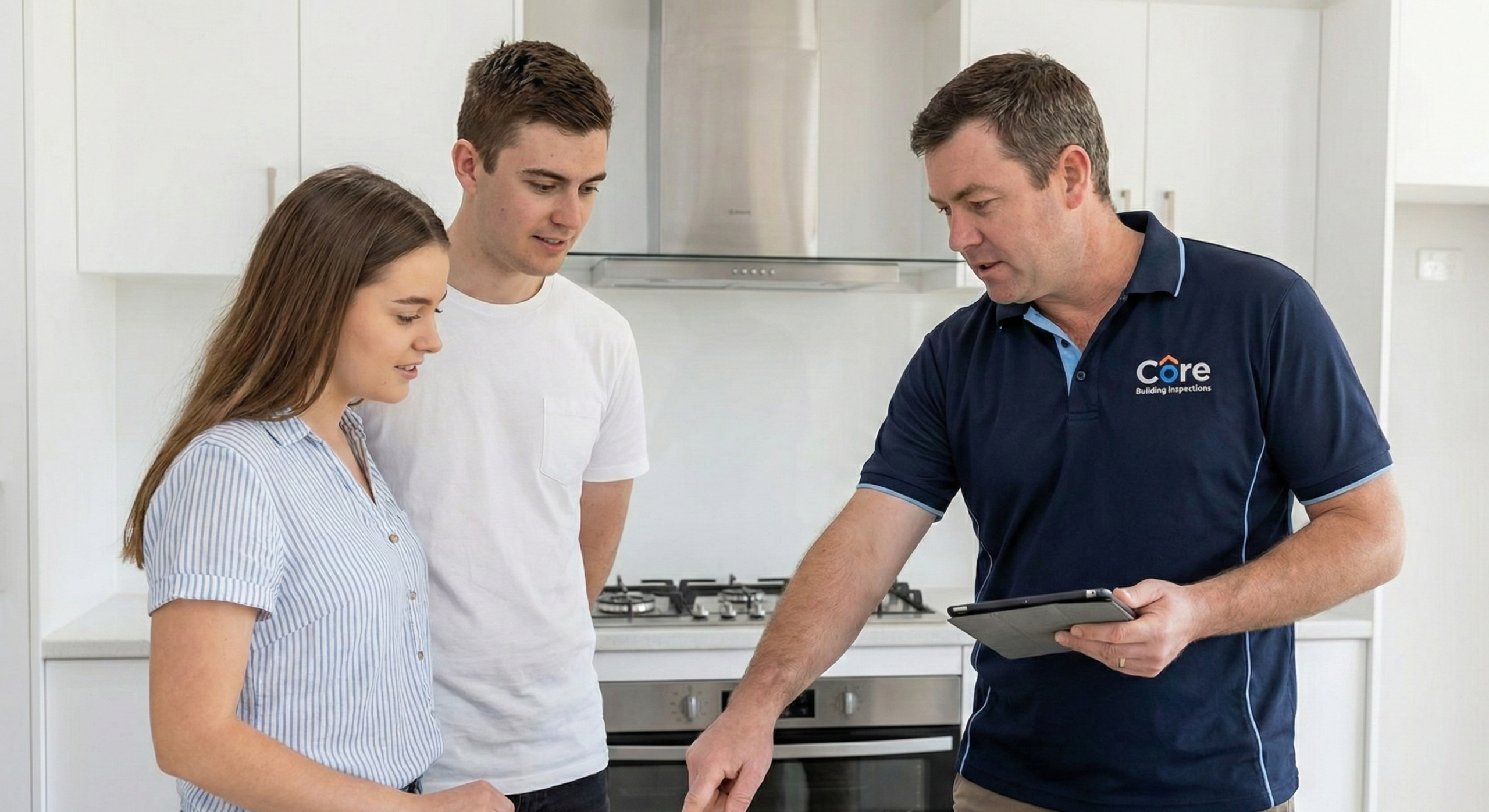
The PCI (often called the Handover Inspection) is a forensic check of the finished product. At this stage, we are looking for quality of workmanship and ensuring everything operates as it should.
What we check:
-
Paint and Plaster: Identifying scratches, chips, poor coverage, or uneven surfaces.
-
Joinery: Checking that cabinets, drawers, and doors open smoothly and don’t bind.
-
Tiling: Checking for cracked tiles and consistent grout lines.
-
External Drainage: Ensuring the ground slopes away from the house to prevent flooding.
-
Roof Void: A final check in the ceiling space for insulation coverage.
We provide you with a comprehensive list of defects that the builder must rectify before you hand over the final cheque.
Why Choose Core Building Inspections?
Building a home is a complex puzzle, and even the best builders can miss a piece. At Core Building Inspections, we don’t just look for problems; we look for solutions.
Our inspectors are registered, experienced, and equipped with the latest technology. We act as your eyes and ears on-site, ensuring that your new home meets not just the “minimum standard,” but your standard.
Don’t leave quality to chance. By investing in these 5 critical building stage inspections, you are buying peace of mind, protecting your resale value, and ensuring your new home is built to last.